
When was the last time something surprised you in your own practice?
After 15 or 20 years, you know every routine inside out. You know who’s running late on Monday mornings, which patients want a Thursday appointment and where the Therabands are kept. You’ve built up this knowledge over many years. It gives you confidence and gets you through busy weeks. And it’s the best foundation for something that keeps every practice alive: curiosity.
This is exactly where motivation within the practice team comes in. It grows as soon as you and your team discover new things together. The great thing about it is that even small sparks are enough to breathe new life into things. And you can bring those specifically into your practice.
Routine brings a sense of security. New ideas provide motivation.
Routine is a strength. It saves energy because you’ve already made many of the decisions. The treatments are going well, the team meetings are going well – everything is running smoothly. To ensure that this sense of security also fosters enthusiasm, your team needs regular fresh inspiration.
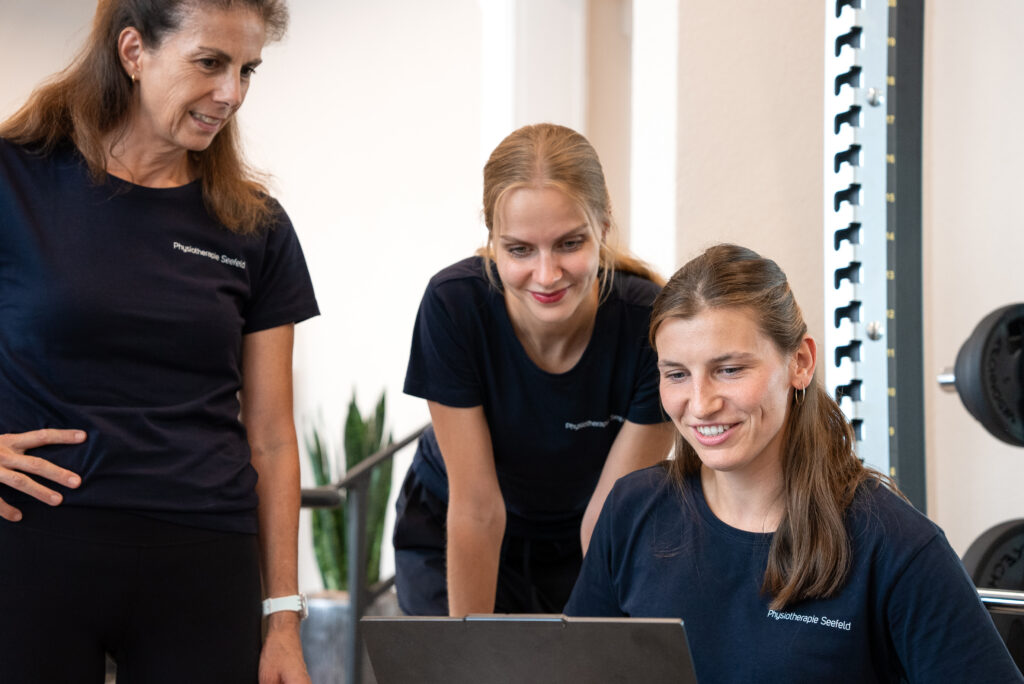
The figures show that it’s worth it. According to the Gallup report «State of the Global Workplace 2026» Worldwide, only 20 per cent of employees experience genuine engagement at work. A committed team therefore gives you a real edge. This makes a big difference, particularly in small teams. In a team meeting, when someone contributes their own idea. On the training floor, when a therapist shows their colleagues a new exercise.
What makes this special is that, as the owner, you are also part of this team. According to Gallup, engagement amongst managers stands at 22 per cent. Your energy therefore has a double effect: when you’re enthusiastic about what you’re doing, your team is the first to notice.
Five ideas to breathe new life into your practice
Where’s the best place to start? There are five approaches that have proven their worth time and again in practice. They don’t cost much. Above all, they require one thing: your conscious decision. For each suggestion, you’ll find a first step to get you started next week.
1. Think outside the box
Taking a look at how another practice operates is the quickest way to come up with new ideas. How does a colleague organise their appointment schedule? How does another team implement exercise therapy? Half a day’s work shadowing will teach you more than a whole reference book, because you experience the ideas first-hand in everyday practice. And your experience is just as valuable to your colleagues. That’s why, at SPP network places so much emphasis on collaboration between practices.
Your first step: ring a colleague and ask if you can shadow them for half a day. Take a therapist from your team with you. There are two of you, so you’ll see more and can bring back ideas together.
2. Let your team try out new things
Ask a therapist to try out a new approach and present it to the team. It could be a new group programme, a digital exercise programme or a method learnt during their most recent training course. The great thing about this is that whoever is given the opportunity to present something takes on responsibility. And responsibility is motivating.
Your first step: At the next team meeting, ask, «What’s something you’ve been wanting to try for ages?» Choose an idea together and give it a one-month trial run. Make a note straight away of the date when you’ll discuss your experiences.
3. Turn every course into a mini-training programme
Further training is twice as effective when the knowledge is shared across the whole team. After each course, set aside 20 minutes in the team meeting for the therapist to share the key points. It’s best to do this practically: with a Theraband in hand or right there on the treatment table. That way, the whole team learns together. And those who have attended the course feel valued.
Your first step: Set aside 20 minutes at the next team meeting for the therapist who most recently attended a course. Let them know well in advance so they can prepare.
4. Get an outside perspective
After 20 years in the same premises, you know every nook and cranny. An outside perspective adds a fresh angle to this knowledge. A colleague, a coach or a sparring partner asks you questions that help you see familiar things in a new light. Why do we do it this way? What would a new therapist try here first? Questions like these open doors.
Your first step: invite a colleague to visit your practice for an hour. Walk together the route a patient takes: from reception, through the waiting area, to the training area. And ask your newest therapist for their first impressions. They’ll see your practice with fresh eyes.
5. Make small changes visible
A breath of fresh air comes about through lots of small steps. A newly designed break room. A new initiative. A team idea that you put into practice together. Highlight these steps and celebrate them with your team. This reinforces the feeling that things are moving forward here.
Your first step: Start the next team meeting with a question: «What new things have we done this month?» Write the answers down on a flipchart in the break room. Over the months, this will build up into a list that shows you all just how much you’re achieving.
As a practice owner, you create the space for new ideas
In practical terms, this means that you create the space in which new ideas can emerge. Your team fills it with ideas. Your role evolves from that of a doer to that of an enabler. And after 20 years, you are ideally equipped for this, because you know your practice and your team like no one else.
In short: routine gives you a sense of security. New ideas give you and your team a boost. Together, they make a practice strong, especially after 20 years.
Choose one of the five ideas and take the first step into your next team meeting. And if you’d like to exchange ideas with other practice owners, do get in touch. We’d be happy to chat with you.
Let's talk about your future
Partnership
Personal, trusting and on an equal footing with Julian Weber.